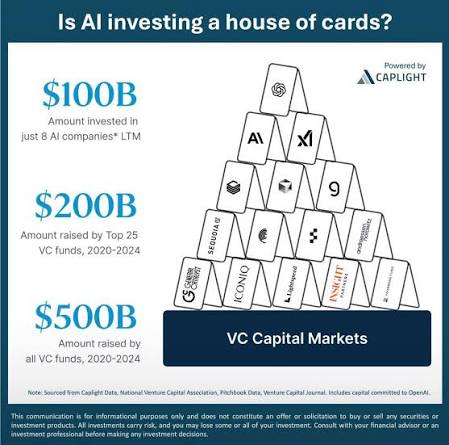
To the untrained eye, this looks like burning cash in a digital dumpster fire. But deep within the underground plumbing of the modern internet, these "digital garbage collectors" are quietly outperforming some of Wall Street’s most heavily hyped artificial intelligence stocks.
They aren't buying trash. They are buying Pre-Baked Authority Assets, and the business model behind it is pure, unadulterated economic arbitrage.
Why it matters:
The global venture capital market is currently obsessed with "Compute" and "AI Infrastructure," driving the valuations of tech giants to volatile, unsustainable heights. Yet, while institutional investors fight over fractions of pennies in stock dividends, independent internet mechanics have realized a fundamental truth: Artificial Intelligence is starving, and its favorite food is old, trusted human text.
When a startup builds a new generative AI model, it requires billions of clean data points to train. Simultaneously, when Google's search algorithm fights against the ocean of low-quality, newly-minted AI spam, it hyper-filters the web by leaning heavily on one specific, un-fudgeable metric: Domain Age and Historical Backlinks.
You cannot programmatically manufacture ten years of internet history. You have to buy it.
The anatomy of the "Garbage Arbitrage":
The operational strategy of these digital landlords is ruthlessly efficient, relying on a three-step cycle that turns ignored server space into high-yield financial assets:
• The Cyber-Archaeology Phase: Utilizing automated scripts, operators scan daily lists of expired domains (drop-catching). They ignore the names themselves and look exclusively for metadata: domains registered before 2015 that possess active incoming links from authoritative sources like Wikipedia, academic institutions, or legacy news outlets.
• The AI Necromancy Phase: Once a domain (e.g., an obsolete 2012 blog about artisanal candle-making) is acquired for $12, the owner does not write new articles. Instead, they deploy an LLM (Large Language Model) to reverse-engineer and automatically regenerate hundreds of highly optimized articles that match the exact topical authority the site originally had, but updated for modern affiliate marketing links.
• The Content-Juice Pipeline: Because Google’s algorithm views the site as a trusted "15-year-old local authority," the newly generated pages bypass the traditional 6-month indexing sandbox. Within weeks, the site ranks on page one for highly profitable commercial search terms, siphoning thousands of dollars in high-intent buyer traffic directly into Amazon, Shopify, or financial affiliate programs.
Between the lines:
"People look at my portfolio of sites about antique tractor repair and localized pottery classes and laugh," says Alex Mercer, a former data scientist who left a $250,000 tech salary to manage over 400 dead domains from his apartment in San Diego. "They tell me I’m hoarding digital trash. But that 'trash' has a 70% net profit margin and passive cash flow. My NVIDIA stock can't match that stability because my assets are backed by the one thing AI cannot replicate: historical human trust tokens."
This is the ultimate paradox of the current digital era: as the internet becomes flooded with synthetic content, the market value of historical, pre-AI human internet real estate has skyrocketed. It is the digital equivalent of buying undervalued land under a highway bypass—it looks ugly, but the billboard traffic is worth millions.
What’s next:
This gold rush will not last forever. Google is actively deploying "Site Abuse" algorithmic updates to crack down on large-scale domain reputation hosting.
However, for the next 18 to 24 months, the "Digital Garbage Economy" remains one of the most lucrative, under-the-radar cash-generation mechanisms on the modern web. It proves a foundational rule of capitalism that Wall Street often forgets: sometimes, the most unglamorous, absurd-sounding businesses are the ones that actually hold the gold.